The Routers of the Pre-Internet Age

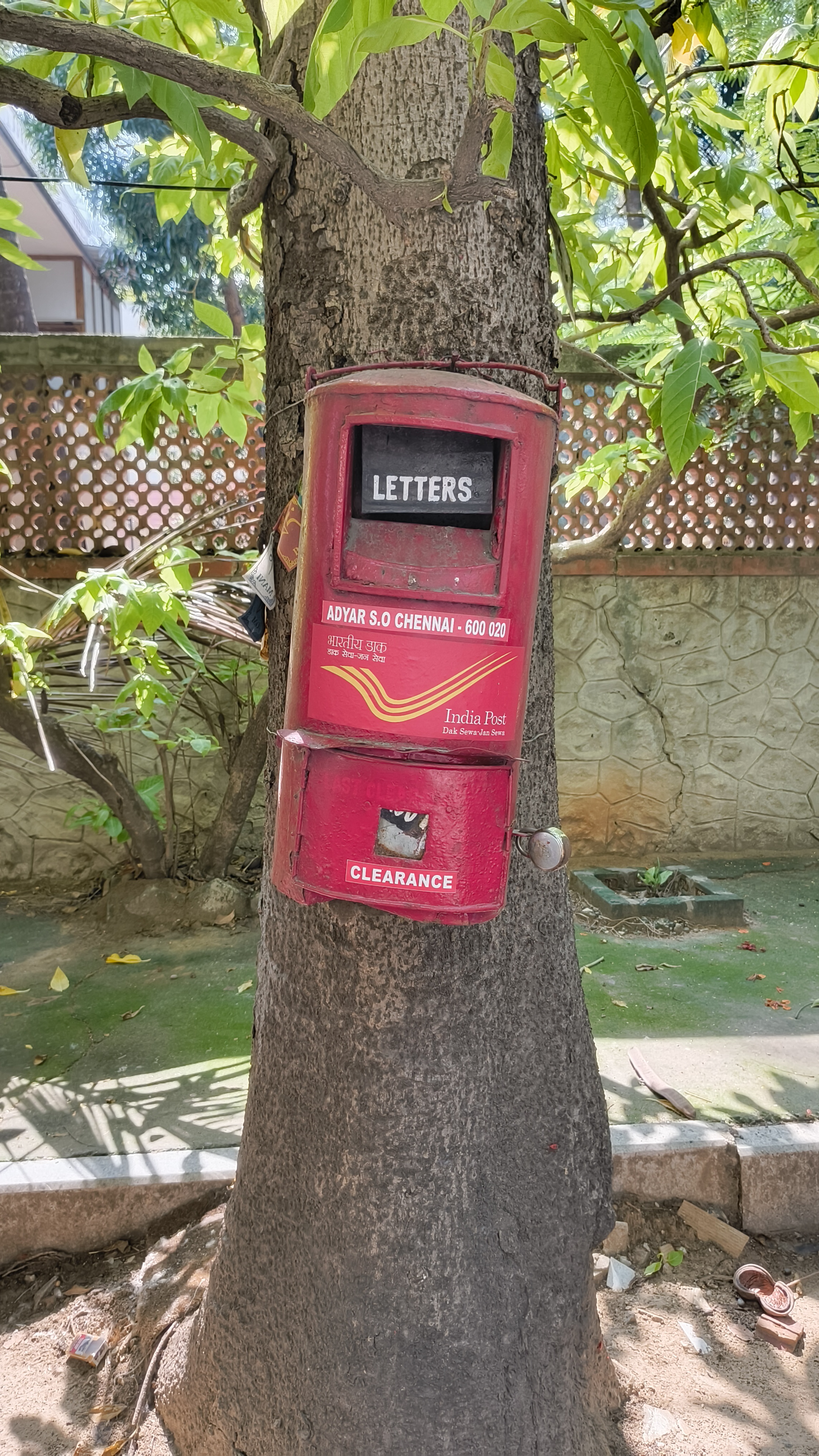
Today I met a friend for lunch. While returning home I spotted something that used to be very common during my childhood days but rare to find these days. Worse even when they are present hardly anyone pays attention to them. I spotted a post-box tied to a tree.

Post boxes were the routers of the pre-internet age. The post-box and the postal system were integral part of the childhood days of my generation. There was a time when the sight of the postman opening the gates of their house would make the kids jump in joy. Among the several well-known brands in India, India Post was one. Almost everyone could instantly recognize the deep red and bright yellow colours of India Post.

Before our household got a landline telephone, the only way to receive any message from relatives who lived in another town was through a post card or inland letter. One of the simple joys of my childhood days were those occasions when my dad or mom would allow me to drop a post-card or letter into a post-box. Receiving greeting cards for festivals or birthday cards made those occasions even more special. The most recent birthday card that I sent was the one that my kids sent my nephew a few months ago.

Post-stamps were one of the most cherished collectibles of my childhood days. The post-stamps that were collected were mostly the old post-stamps with seal that were carefully removed from the letter that the household received. Kids in those days were practitioners of Zen and the Art of Retrieving Postal-Stamps. To remove a stamp from a letter completely in tact was a fine art form – it tested patience, perseverance and skill. And if the letter would have a unique stamp and not one of the usual ones, my joy would be boundless.

Post-cards had a special place during my childhood days. During my schooldays around April just before our annual exams started, each of us had to submit a self-addressed post-card to our respective class teacher. The school will use the post-card to inform each student and his/ her family if the student has been promoted or not. So, towards the end of summer vacation, we would all be eagerly waiting to hear these words: “Sir, Post.” The last post-card that I have managed to retain/ save is the one that my college friend, Prabhu wrote me while I was pursuing masters in Delhi.

When I was doing masters (2002 – 2004), mobile phones started gaining traction. Then came smartphones and social media. With their rise the habit of sending letters, post-cards and greeting cards began to wane. Then came WhatsApp as the primary mode of communication. Now messages are hardly two sentences long. Most responses are just emojis or internet slang like LOL, ROFL, etc.  

What happened to the custom/habit of sending greeting cards for festivals? In the world of WhatsApp each one of us is like a hippie scavenging for valuables in a dustbin. We forward a greeting message from school group to college group, forward greeting message from office group to family group and so on. The habit of coming up with an original, thoughtful greetings message has been degraded by mass-ritual of ‘Forwarding.’

In the 80s and 90s the process of wishing family members and friends living in another town for Deepavali or Pongal would start at least two weeks in advance. With pocket-money being limited, we had to short-list the people to whom we would send greeting cards. Then we had to go to a nearby bookshop or stationery-shop and buy greeting cards with messages that most resonate with us. Then we will write a personalized message as well in each card. For cards that were meant for grandparents every grandchild will write a line or two. Then with the right post-stamp affixed, we will post the cards a few days before the festival to avoid the cards getting delivered after the festival. Even after all these, we can only know whether the card got delivered and in time for the festival only when we meet the addressee in person the next time. That was an era in which the virtue of patience as embedded in everyday life by default.   

With smartphones and digital platforms, our conversations are near instantaneous. With GenAI tools and native AI capabilities of digital platforms we don’t even have to bother our neurons to come up with anything original. The art of thoughtful conversation is fast vanishing. Sometimes one has to wonder net-net whether we have gained or lost by embracing free and instant digital communication. We are digitally connected but emotionally detached. Most people message us because the platform is free and most importantly the effort involved is minimal – just a couple of swipes of the thumb or index finger across a glass surface. We are always online but always distracted as well. Today every act is convenient, but nothing is conscious and thoughtful anymore. In the age of GenAI, most of our messages are statistically predicted digital vomit devoid of emotion & life.

The digital world has made communication easier and convenient but has reduced our treasured moments into trivial ones. As communication has become digital, not only are post-boxes becoming fossilized, but connections are also becoming superficial. There is no more eagerness to send a message to family or friend as I know that I can reach them any time with a couple of taps and swipes on my smartphone. There is no more anticipation for responses too as most responses are some variants of the digital platform’s auto suggestions. In our pursuit of convenience at industrial scale, we have turned our unique human experiences pedestrian and lifeless. In the short run these digital platforms offer us convenience but in the long-run they eviscerate our experience of being human – a devil’s bargain.

Bullied By My Kids

It’s around 11.30 PM. My wife was watching a movie in the living room. My kids and I were about to sleep in our room.

The kids were in the middle of some random conversation as I was drinking water. As I finished drinking water, this is where the conversation was.

Daughter: Dad is forty-six years old.

Son: No, dad is not forty-six years old.

Wanting to provide factually correct information, I joined the conversation.

Me: Yes, I am forty-six years old. I was born in 1980. The year now is 2026. That makes me forty-six years of age.

Daughter: Wow, dad. You were born in 1980. YOU BELONG TO ACIENT TIMES. Ha ha ha ha….

Son: Ha ha ha ha. Did you watch Victory Tour?

Me: Which Victory Tour?

Son: Michael Jackson’s Victory Tour.

Me: No

The flood gates opened and a series of questions mocking my age followed.

Daughter: Were you there when Indira Gandhi became Prime Minister?

Me: What?

Son: Did you shake hands with Adolf Hitler?

Daughter: Shake hands with Adolf Hitler. Ha ha ha ha.

Me: I am not that old.

Daughter: Were you there when Vasco da Gama landed in India?

I was still searching for a response as they both burst out laughing.

Son: Have you met the Pharoahs?

Daughter: Have you met Cleopatra and washed Paatrams (Utensils) in her house?

Father: What! This is ridiculous.

Son was about to ask another question. Daughter intervened.

Daughter: Wait. Did you get your degree from ancient Nalanda University?

Me: Total Damage.

Down Memory Lane #4: First Interaction in New School

“Are you a new student?” he asked.

“Yes,” I replied.

“Which section?”

“I don’t know.”

“What’s your name?”

“Yogesh. And what’s your name?”

“Vinci Raj. N.C. Vinci Raj.”

“Can you repeat the name once again?”

“Vinci Raj. N.C. Vinci Raj.”

I had a hard time getting the name. For a moment I thought it was Linci Raj. But one of the other boys called him as, “Vinci.” So, it’s Vinci Rraj. Very different name compared to the Raja, Ram, Ramesh, etc. that were very common in those days.

This was my interaction on the first day at my new school standing in the assembly area in June 1994. My family had recently relocated back to Chennai. And I had joined Boston Matriculation School in Nandanam, Chennai or Madras as it was called then.

The ground where we had assembled was rectangular in shape with two buildings on either side (I would get to know in a few minutes that the one on the left is primary block and the one on the right is secondary block). The ground was covered in sand, resembled a football field but neither had the length or breadth to be a proper football field.   

One the far side, there was a room (P T Room) and there was a shed for school bus adjoining the room. Beyond them there was garden spanning the entire breadth covering the ground and both the buildings. The grass in the garden was patchy, almost like hair on a bald guy’s head. But there were a number of coconut trees and a few neem trees providing ample shade. On the far side of the garden, there was a huge compound wall protecting the ground and the school from the Adyar River.

Smack in the middle of the ground floor of the secondary block I was able to see a mike. A bunch of students with a Shruthi box and a couple of teachers had gathered around the mike. The entire school assembled in the ground standing as per classes facing the mike.

“Is he a new student?” one of the boys asked Vinci Raj pointing to me.

“Yes. His name is Yogesh,” He replied.

The voice of the PT master started the prayer session in earnest. In this school they didn’t call it prayer session, it was called Bhajan session. After a few announcements, the P T master handed over the mike to the principal. After a few instructions, the principal handed over the mike to students standing with the Shruthi box.

They started singing and everyone started singing along with them. Probably, I was the only one who was not singing. The Bhajans were sung in three languages – Tamil, Sanskrit and English. The English songs were sung by an Anglo-Indian teacher. I would take me a few weeks to learn those songs.

Post the assembly, the students had to go to their classes. It was the first day of school. But the students were walking towards their classes with the same enthusiasm of Goat that were being taken on a Bakrid procession. It took forever for the turn of 9th standard students to march towards our classrooms.

We marched or rather strolled to reach the 2nd floor. I was surprised when all of us were made to sit outside our classrooms. Mrs. Chithra, one of the senior-most teachers was in charge of allocating sections. When it was my turn, she asked for my admission card.

“What’s your second language?” she asked as she was looking at my admission card.

‘Tamil Miss,” I replied.

She turned to the teacher standing next to her and said, “Let’s put him in 9B. There are already too many students in 9A.” The teacher noted down my name on the students list that she was holding. Within a few minutes the students allocation process was over. There were a couple of others who joined the school that year like me.

Once the process was over, the teachers asked us to go to our respective classes. Without much commotion the students were entering the classrooms. I was the last to enter. I looked around as I entered the room.

In a room full of strangers, I could recognize one person. Vinci Raj, N.C. Vinci Raj.


Note: True to the name that he shares with Leonardo Da Vinci, Vinci Raj went on to embrace his artistic side. He is creative director, has made a number of short films and has even given a TEDx talk. He has won a number of awards for his creations. You can check his portfolio here.


This is the fourth post in the series, ‘From Chennai to Madras Down the Memory Lane’

1st post in the series: A Friend’s House

2nd post in the series: Sharing Slivers of Joy

3rd post in the series: The Audience Laughed when Jacked Died of Hypothermia

Down Memory Lane #3 – The Audience Laughed when Jacked Died of Hypothermia

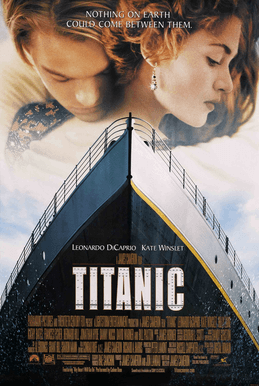
I was in high school when the movie Titanic was released. A bunch of us in school decided to go and watch the movie as the movie had a sensational hit across the world and Kate Winslet became a sensational hit amongst us.

In those pre-internet days, to reserve a movie ticket one had to go in-person to the theatre a few days before the day of the show, wait in queue and book the ticket. Then the person has to come back on the day of the movie show and watch the movie. So, two trips to make sure that you get to watch the movie.

My friend Venkat, his brother, a classmate of ours and I went to went to Devi Theatre complex on Mount Road to watch the movie. Since the movie had been theatre for a few weeks by then, we thought we should be able to get the tickets at the counter itself if we go a couple of hours prior to the show.

Turned out that our collective instinct was wrong. We saw houseful board at the counter when we reached the theatre. But we managed to buy tickets from one of the guys who was selling the tickets with a markup. Only two of tickets were for seats adjacent to each other. The other two were scattered in random corners in the theatre. Too bad. But in those days, it was considered better than going home without watching the movie.

Devi Complex had four theatres: Devi, Devi Bala, Devi Kala and Devi Paradise. We got tickets for the Titanic movie at Devi, the biggest and grandest of the four theatres. Incidentally the movie Titanic ran for 365 days in Devi theatre.     

Devi theatre was one of India’s first theatres to install Dolby audio. In those days Devi Complex competed with Satyam Cinemas for the best multiplex in Chennai. Alas, Satyam won the battle in subsequent years because of tasty popcorn!

Devi theatre is a large movie hall by today’s multiplex movie hall standards. All the movie classes in the theatre were in the same level. It was one large movie hall – end to end.

We settled down in our seats right on time for the movie to start. The grandeur of the onscreen Titanic ship mesmerized me. The beauty and charm of Kate Winslet as Rose eclipsed even the grandeur of the Titanic. And Leonardo Di Caprio as Jack unnecessarily tagged along with Rose throughout the movie.     

The plot moved seamlessly towards the tragedy of the sinking of the Titanic due to the collision with an iceberg. Everyone in the theatre was hooked to the screen. Then the heart wrenching scene slowly unfolded. To save Rose from drowning, Jack decides to stay in the cold Atlantic waters. As a result, Jack dies of Hypothermia. Rose if heartbroken on realizing that Jack is dead.

You could sense the collective sadness in the movie hall. At this very juncture, I heard the voice of my classmate saying, ‘Jack Illana Yenna Ma, Naan Iruken Unaku.’ (Translation: What if Jack is no more; I am there for you). A tsunami of laughter swept through the entire movie hall! Even after the laughter died down, the humor vibe still lingered in the air.

And so, an off-the-cuff remark by a mischievous teenager evoked an anti-climatic response from the audience for the most iconic scene from a movie that went on to win 11 Oscars and made more than $1 Billion in box-office collections. In that moment, my classmate became the David who vanquished James Cameroon, the Goliath with a verbal pebble.

This is the third post in the series, ‘From Chennai to Madras Down the Memory Lane’

1st post in the series: A Friend’s House

2nd post in the series: Sharing Slivers of Joy

4th post in the series: First Interaction in New School